
Have you ranked every golf course you’ve played?
Since I started writing, I’ve compiled such a list and have found it to be a rewarding experience.
While golf course rankings are inherently a subjective matter of opinion (even though some take it far too seriously), they present a good opportunity to reflect on what you value the most in a golf experience. Playability? Course conditions? Architectural purity and significance? Challenge? Scenery? Overall ambience? These are all characteristics to consider, and are definitely reflected in my own list.
I’ve been annually updating this list to add new courses played (most recently, at the end of 2024) and to refresh my current take on properties I’ve recently visited, given renovations/course updates and shifts in my own preferences.
1. Erin Hills (Hartford, WI)
Architects: Dana Fry, Michael Hurdzan, and Ron Whitten (2006)
Some places are just destined to become golf courses.
Erin Hills is one of these magical spots, occupying a gifted property just west of the Kettle Moraine, loaded with glacially-sculpted hills and valleys ideally spaced for golf holes. The architects barely had to modify the land, as natural greens and fairway corridors already existed in the terrain. The course has a very interesting history, culminating with hosting the 2017 U.S. Open.
A commitment to excellence and investment in world-class service have pushed this track into the stratosphere of my favorite courses, and it’s a must-play for anyone living in or visiting Wisconsin. My course review explores how Erin Hills has pulled it all together to become a truly great golf course.
Every time I play Erin Hills, I love it even more than before, regardless of how I play. The property is special on another level, one where you have to see it to believe it. Case-in-point, in my 2023 round I got beaten to a pulp on the demanding back nine, carded a season-worst 18-hole score of 91 and still walked away with a smile, knowing it was the best property I had visited all season. And you know what? I also realized it’s the greatest couse I’ve ever played, period.

2. Sand Valley (Rome, WI)
Architects: Bill Coore and Ben Crenshaw (2017)
In 2024, I finally had an opportunity to play the OG at Sand Valley Golf Resort. While I expected greatness, I had no idea this course would speak to me so succinctly.
It was an incredible experience.
Bounding over dramatic inland dunes, this Coore/Crenshaw design hits golfers with one great hole after another, making full use of the sandy soil and firm and fast conditions to present an impeccable heathland golf experience.
While this is probably the toughest track at the resort (not considering the neighboring mostly-private Lido, of course), it sets up quite well for my game, as I love to play the ball low and use the ground to my advantage. The par threes especially stood out to me as thrilling one-shotters, with a few of them playing from elevated tees showcasing sweeping views of a National Park-caliber landscape.

3. Pacific Dunes (Bandon, OR)
Architect: Tom Doak (2001)
Following the smashing success of the original Bandon Dunes course, Tom Doak’s masterpiece was built on a more compelling property than Bandon’s OG, weaving through large dunes and shore pines and emerging upon the ocean several times in stunning fashion. Pacific Dunes’ greens and fairways are a bit less spacious than those of the other Bandon Dunes courses, demanding a higher degree of precision. The variety of the layout, the raw beauty of the property, and the strategic aspects of the hole designs make this an unforgettable track and my favorite course at the world’s best golf resort.

4. Milwaukee Country Club (River Hills, WI)
Architects: Charles Alison and H.S. Colt (1929)
The top-ranked classic course in Wisconsin, Milwaukee Country Club is brilliantly laid out over a dramatic property encompassing an epic six-hole stretch over and along the Milwaukee River. All 18 holes are memorable, however, thanks to distinctive and punishing bunkers and sloping, a superb routing, and immaculate conditioning. Milwaukee Country Club is Wisconsin’s ultimate private golf experience, and those lucky enough to get a chance to play there are in for a special day.

5. Whistling Straits (Straits) (Haven, WI)
Architect: Pete Dye (1998)
Some courses, despite being exceptionally challenging, set up well to my eye and make me relax. I’m proud to say that the Straits Course is one of these properties, where I’ve had a few of my most memorable rounds in recent memory, beating my handicap at one of the most stunning settings in all of golf.
With miles of uninterrupted, pristine Lake Michigan shoreline, former PGA Championship and Ryder Cup host Whistling Straits is the masterwork of renowned maximalist architect Pete Dye. The crown jewel of the Kohler Club resort, Whistling Straits was once a flat military base. Dye moved mountains of dirt to create as convincing of a man-made dunescape as I’ve ever seen. Eight holes run along the shore of Lake Michigan, but nearly every hole feels right on the lake. The golf is dramatic, demanding, and stunningly memorable.

6. The Ocean Course at Kiawah Island (Kiawah Island, SC)
Architect: Pete Dye (1991)
The Ocean Course was famously tabbed to host the 1991 Ryder Cup before it even opened. Pete Dye delivered a world-class track, with a routing that weaves through marshes and dunes before concluding with an epic five-hole stretch hugging the beach.
22 years removed from my first visit, I returned to play The Ocean Course in 2024 on a gorgeous spring morning, and it was every bit as spectacular as I remembered from so long ago. Known as one of the nation’s most challenging golf courses, the layout actually sets up quite well for my game, with spacious corridors and tough green complexes that favor those with a strong ground game.
If you select an appropriate set of tees, there’s no reason you can’t have an enjoyable experience here and bask in the glory of a top ten U.S. public track.

7. Crystal Downs (Frankfurt, MI)
Architects: Alister MacKenzie & Perry Maxwell (1929)
In 2003, I lucked into an opportunity to play Crystal Downs through my friend’s grandparents, who lived near the course and were members. Widely regarded as Alister MacKenzie’s Midwest masterpiece (with noteworthy assistance from his apprentice Perry Maxwell), this golden age classic is wedged between Lake Michigan and Crystal Lake, featuring dramatic elevation changes and incredible greens complexes. Many of the holes were memorable, but after 19 years since playing it, the par-4 6th to a horseshoe green still stands out in my memory as an extremely unique and innovative hole.
I hope to return to Crystal Downs someday to rekindle these fond memories from my youth, and also to get some great photography to include here.
8. Mammoth Dunes (Rome, WI)
Architect: David McLay-Kidd (2018)
The second course built at Sand Valley, Mammoth Dunes is a clinic on how to build a course that is very playable yet visually intimidating. The track lives up to its moniker, meandering through a towering dunescape and around a giant V-shaped ridge. The result is a scenic roller-coaster round on an awesome property, and one heck of a fun course.

9. Bandon Dunes (Bandon, OR)
Architect: David McLay-Kidd (1999)
The OG of the best golf resort on the planet, this track blazed the trail for U.S. destination golf in remote locations. Unknown twentysomething David McLay-Kidd maximized every slope and feature on this stunning property perched high above the Pacific Ocean. Firm and fast, this true links course is pure fun, and the anticipation builds until the enthralling 16th, a reachable par-4 hugging the cliffs in the most dramatic fashion imaginable.
Check out Brian’s review of Bandon Dunes Golf Resort at https://wiscogolfaddict.com/2022/06/30/bandon-dunes-golf-resort-a-golfers-dream-come-true/

10. Lawsonia (Links) (Green Lake, WI)
Architects: William Langford and Theodore Moreau (1930)
On the sprawling Lawson estate located along Green Lake, an ambitious golden age project took form in the 20’s with Langford and Moreau, masters of the steam shovel, moving mountains of dirt to create their masterpiece. The greens complexes are massively elevated and sloped, placing a huge premium on short game prowess. Highlights include the “boxcar” par-3 7th and the entire back nine which plays cohesively in a dramatic, open plot of land. Over the past couple of years, Lawsonia Links has found a place on my annual must-play list, as it is always a delight to return and experience its wonderful architecture time and time again.

11. Sedge Valley (Rome, WI)
Architect: Tom Doak (2024)
Green sites are the backbone of golf architecture, and Tom Doak worked his wizardry to find the 18 best ones at Sand Valley’s newest course. That necessitated some oddities in the case of Sedge Valley, most notably a short routing only adding up to a par of 68.
Is Sedge Valley any less compelling a golf experience due to its short length and odd par total? Absolutely not!
Occupying a heaving property, this is a thrill ride from start-to-finish with outstanding golf holes sculpted out of stunning terrain.
As a modest ball striker, I love shorter courses that require a thoughtful approach, and that’s exactly what you’ll find at Sedge. While the fairways are gaping, you’ll need a savvy ground game and excellent play around the greens to score well.

12. Bay Harbor (Links/Quarry) (Bay Harbor, MI)
Architect: Arthur Hills (1998)
This spectacular property sits high atop a bluff overlooking Lake Michigan, with the Links nine hugging the cliffs and the Quarry course navigating through a dramatic rock quarry with two epic lakeside closing holes.
The scenery here is extravagant, rivaling that of other famous shoreside layouts like Whistling Straits and Arcadia Bluffs. The golf itself lives up to the billing, with challenging and strategic Arthur-Hills designed holes making maximum use of the gifted site.
This is Northern Michigan golf at its finest, and it boggles my mind that Bay Harbor doesn’t get better recognition in national public course rankings.

13. Arcadia Bluffs (Bluffs) (Arcadia, MI)
Architects: Rick Smith and Warren Henderson (2003)
Located off the beaten path in northern Michigan, this gem is the Whistling Straits of Michigan, and is arguably more scenic than the course we know and love on the Wisconsin side. The property slopes heavily toward a massive bluff, with sweeping views of Lake Michigan on nearly every hole and three holes directly on the waterfront. The view from the clubhouse may be the best in all of golf, with a panoramic vista that stuns the senses. The course itself is a thrill ride that plays over dramatic elevation changes, around heaving manmade dunes, and onto very undulating greens.

14. Bandon Trails (Bandon, OR)
Architects: Bill Coore and Ben Crenshaw (2005)
The only inland course at Bandon Dunes, this track had the seemingly impossible task of living up to the first two amazing courses at the resort, without having oceanfront. Coore and Crenshaw delivered a brilliant routing, blending holes into three distinct environments and weaving the experience together with hiking trails guiding golfers between the holes. It’s a surreal experience in nature, with 18 very compelling holes to stir the golf senses as well.
Check out Brian’s review of Bandon Dunes Golf Resort at https://wiscogolfaddict.com/2022/06/30/bandon-dunes-golf-resort-a-golfers-dream-come-true/

15. Pinehurst No. 4 (Pinehurst, NC)
Architects: Donald Ross (Original, 1919), Gil Hanse (Redesign, 2018)
Widely regarded as the second-best track at Pinehurst, No. 4 has been tinkered with for decades by many big-name architects, and its character has evolved as architectural eras have come and gone. The most recent take on the property by Gil Hanse and Jim Wagner seems like the most genuine interpretation of Donald Ross’ original golden age intentions for the layout, with a routing sculpted out of a restored sandscape that maximizes strategy, options and challenge. The redesigned greens complexes are impressively varied, with an array of slopes and angles that will keep all golfers on their toes.

16. The Lido (Rome, WI)
Architect: C.B. Macdonald (1917)
The Lido is proof that a golf course can transcend time and space. Originally known as one of the finest layouts in America, The Lido once occupied a seaside plot on Long Island before being repurposed as a military base in WWII.
Using cutting edge computer-generated imagery, Tom Doak and his team worked their craft to recreate The Lido on a flat property adjacent to Sand Valley Golf Resort, replicating the original design down to the inch. This was genius-level golf construction wizardry, and now golfers in the modern age can experience C.B. Macdonald’s masterpiece in genuine fashion.
Part of that experience is taking on one of the world’s toughest golf courses, with menacing, raised green sites and villainous bunkering stalking the golfer at every turn.
I might not have been quite as taken as most architectural enthusiasts in my first visit to The Lido, but my loop there still left me floored and aching for another round.

17. Mid Pines (Southern Pines, NC)
Architect: Donald Ross (1921)
Mid Pines is one of Ross’ original creations only a few miles away from his other iconic golden age project, Pinehurst. The venue oozes with history and tradition, starting with its massive, old-school clubhouse. The routing has been left untouched, winding trough a pristine wooded property. The attention to detail on maintenance of the property rivals most botanical gardens, and creates some tremendous visuals throughout the round. The track is short, but its narrow width and strategic placement of hazards more than make up for it, demanding precision and a thoughtful approach.

18. Pine Hills Country Club (Sheboygan, WI)
Architect: Harry Smead (1905)
This top-tier Wisconsin private club has shot up these rankings after playing it for the first time in about 20 years. Drew Rodgers’ recent restovation of the property was extraordinary, featuring significant tree removal to open up sight lines of wild topography and Harry Smead’s brilliant golden age architecture. Most notably, the par four 18th has been transformed from a claustophobic, tree-choked dogleg into a glorious cape hole straddling a bluff, and is now one of the state’s best finishers.
The course occupies a dramatic property of rolling hills and forest, with several encounters with the Pigeon River throughout the round. Pine Hills’ use of bold contours and sloping greens is reminiscent of Langford/Moreau steam shovel wizardry, and it’s a must-play for any enthusiast with access to the course.

19. Cabot Citrus Farms (Karoo) (Brooksville, FL)
The last place one would expect to find rugged sandhills is Central Florida, a region typically known for flat swampland. Yet, just northwest of Tampa lies a sandy plot home to one of the hottest new golf properties in the U.S. – Cabot Citrus Farms.
Previously known as World Woods, Cabot has completely reimagined the property with mass tree removal and installation of bold, modern architecture. In its crown jewel, the Karoo Course, architect Kyle Franz implanted wild greens complexes and craggy, intimidating bunkers to yield a layout that’s more Sand Valley than Florida.
Featuring width, drama and risk/reward optionality, the Karoo Course is a thrill from start to finish, and while my first visit to the property in early 2024 left me in awe, I look forward to returning after it’s had a chance to grow in some more.

20. The Highlands (Arthur Hills) (Harbor Springs, MI)
Architect: Arthur Hills (1995)
While a trip to BOYNE Golf resorts in 2024 shattered my expectations overall, the Arthur Hills Course at The Highlands surprised me the most of all seven courses we played. Occupying one of the most scenic inland golf settings I’ve experienced, the Arthur Hills Course makes maximum use of dramatic wooded topography with bold golf holes routed through the forest and across hills.
The style of this course reminded me more of a Pete Dye creation than one of Arthur Hills, with massive hazards lining wide fairways, encouraging daring play. Its playability and sheer drama were right up my alley, making it my second-favorite course under the BOYNE umbrella, no small feat.

21. Torrey Pines (South) (La Jolla, CA)
Architect: William F. Bell (1957)
Set atop towering cliffs overlooking the Pacific, Torrey Pines may be the most spectacular setting in all of municipal golf. The South Course, host to the annual PGA Tour’s prestigious Farmers Insurance Open and two-time U.S. Open host, is a brutally difficult yet gorgeous track traversing canyons and featuring multiple encounters with the ocean.

Architects: Bill Coore and Ben Crenshaw (2020)
The sixth and newest layout at the best golf resort on the planet, Sheep Ranch is a Coore/Crenshaw masterwork of routing on a flat, exposed plot of land perched atop rugged cliffs. Sheep Ranch offers the best views at Bandon, and its playable setup offers the best chance to score well at the resort, provided the wind doesn’t blow hard.

23. Old Macdonald (Bandon, OR)
Architect: Tom Doak (2010)
The fourth course built at Bandon Dunes features less spectacular views than its counterparts, but Tom Doak and Jim Urbina created massive, undulating template greens to make up for it. This true links course pays homage to the great classic architect C.B. Macdonald, and requires sound strategic thinking and an excellent short game. Signature spots such as the Ghost Tree on #3 and the clifftop green on #7 add drama to an otherwise less striking property, at least by Bandon’s standards.

24. Tobacco Road (Samford, NC)
Architect: Mike Strantz (1998)
Known as “Pine Valley on Steroids,” this roller coaster ride cut out of the North Carolina sandhills features some of the boldest (mostly) manmade features and slopes I’ve ever seen. While Strantz’ funhouse layout is visually intimidating, plenty of room exists with bailout options available, allowing for an aggressive approach that could pay off in big way on a good ball-striking day. However, be sure to avoid the array of diabolical spots on the track, or you could find yourself “Strantzed” with a large number on the scorecard.

25. Oneida Golf & Country Club (Green Bay, WI)
Architects: Dorr Packard and Stanley Pelcher (1929)
Oneida is a classic gem, with old-school greens complexes that just got fabulous restorations by Roger Packard and Hills & Forrest. This scenic track alternates between forest and parkland settings, with Duck Creek winding its way throughout he layout, adding tremendous character and challenge. In many ways this property reminds me of Milwaukee Country Club, and it’s one of the state’s top classic courses and top private clubs in in its own right.
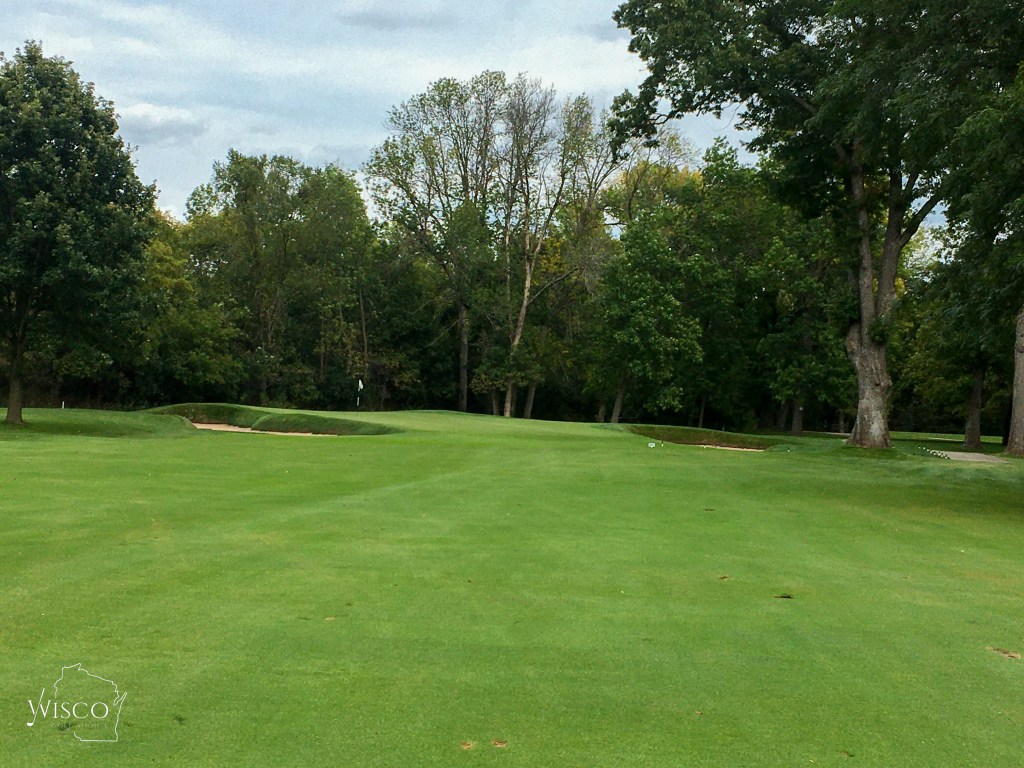
26. Blackwolf Run (Meadow Valleys) (Kohler, WI)
Architect: Pete Dye (1988)
In my 2023 Kohler trip, I finally played the Meadow Valleys course for the first time. I was so impressed that it’s debuting as the second best Destination Kohler course in these rankings. What makes it stand out compared to the other installments at the resort? Well, it’s home to arguably the best nine holes in the region, and one of the best nines in the whole state. Part of the Blackwolf Run original championship 18, the back nine at Meadow Valleys is a thrill ride over wild topography, playing through prairie, forest, and straddling steep slopes perched next to the Sheboygan River. The front side at Meadow Valleys is no slouch either, but it’s the most subdued stretch at Destination Kohler in a flatter prairie setting.

27. Glen View Club (Golf, IL)
Architect: William Flynn (1897)
Right down the street from my previous residence, I always yearned to play this William-Flynn-designed golden age gem, and I got my chance to visit in 2024. This beautiful parkland layout has everything one can expect at a classic Chicago-area club, complete with rich history, prestige and superb architecture.
Despite decent width off the tee, Glen View’s well-bunkered, blazing fast greens provide more than enough challenge, and if you find yourself out of position on a hole you’ll be staring down double bogey or worse.

28. The Links at Spanish Bay (Del Monte Forest, CA)
Architects: Robert Trent Jones, Jr., Tom Watson and Frank Tatum (1987)
This track may be the red-headed stepchild of the Pebble Beach resort, but it sure occupies a compelling property. Over half of the layout meanders over dramatic dunes set alongside the ocean and 17-Mile Drive, while the rest of the routing takes golfers through a majestic maritime forest. This RTJ2/Tatum design is often cited as one of the country’s best potential redesign projects given the quality of the land, but the bones of a great course are already there.

29. Conway Farms (Lake Forest, IL)
Architect: Tom Fazio (1991)
This former BMW Championship host is one of the top modern properties in the greater Chicago area, playing over a mostly meadow-based but varied setting. Its immaculate conditioning and firm, challenging greens set Conway Farms apart from its peers.
I’ve heard a recent Jackson Kahn renovation has vaulted this property even further into the upper echelon of Chicago-area private golf, and I hope to return someday to see the course updates for myself.

30. SentryWorld (Stevens Point, WI)
Architect: Robert Trent Jones, Jr. (1982)
Wisconsin’s OG destination course is the product of a spare-no-expense early 1980’s project undertaken by Sentry Insurance, with the resulting Robert Trent Jones, Jr. design immediately vaulting itself into the top tier of Wisconsin properties. Over the years, Sentry has continually invested in the property, including multiple renovation/redesign efforts to maintain its status as one of the most compelling, well-manicured parkland layouts in the state. In the summer of 2023, SentryWorld showed off its chops as a tournament host, with the U.S. Senior Open coming to town. The event was an unequivocal success, and I expect SentryWorld to continue bringing in prestigious tournaments in the years to come.

31. The Bull at Pinehurst Farms (Sheboygan Falls, WI)
Architect: Jack Nicklaus (2003)
Just down the road from world-famous Blackwolf Run, The Bull was built in a similar setting showcasing dramatic ravines and forests with the scenic Onion River running its way throughout the property. Known for being extremely challenging, I actually found this Nicklaus layout reasonably playable, with options from tee-to-green that even shorter hitters can take on. The Bull may not get as much press as other A-list Wisconsin properties, but it’s every bit as memorable and well-run as any other public facility I’ve visited in the state.

32. Stevens Point Country Club (Stevens Point, WI)
Architect: Larry Packard (redesign in 1968)
In 2024 I had my first chance to visit this highly-regarded venue, and it definitely lived up to expectations. Set on a sandy landscape framed by towering pines, Craig Haltom worked his magic to bring out the absolute best in this property. With sandy waste areas now fully exposed, it vividly reminded me of Pinehurst even though comparisons can also be drawn to nearby Sand Valley.
Featuring a bevy of dogleg lefts, this course feasted on my fade/slice and I naturally shot a high score. However, its impeccable conditioning, outstanding aesthetics and superior design still left me with a smile on my face that day.

33. The Highlands (Donald Ross Memorial) (Harbor Springs, MI)
Architect: Billy Newcomb (1989)
With every hole modeled after famous Donald Ross creations, this track is a throwback ride through the woods of Northern Michigan. On a trip to BOYNE filled with modern courses, the Donald Ross Memorial provided a wonderful counterpoint and paired extremely well with a loop on the maximalist Arthur Hills Course later in the day.
With strategic, infringing bunkering and tough greens, you’ll need a competent long game and savvy play around the greens to score well here, just like you would at most original Ross courses. That said, while I’ve struggled at Ross designs in the past, I felt more comfortable here, posting a respectable score.

34. Washington County Golf Course (Hartford, WI)
Architect: Arthur Hills (1997)
Washington County is an all-world municipal facility laid out over dramatic rolling prairie just west of the Kettle Moraine. It’s a very similar setting to Erin Hills, to the point where it’s been dubbed “Little Brother” to the famous U.S. Open host. Arthur Hills’ engaging design features subtle contours and blazing fast greens, making it a demanding but beautiful test.

35. Whistling Straits (Irish) (Haven, WI)
Architect: Pete Dye (2000)
Following the unprecendented success of the Straits Course, Pete Dye embarked on the difficult task of building a second course at Whistling Straits without any new lakefront to work with. He approached this project like a movie sequel, routing a dramatic, varied collection of challenging holes through massive man-made sand dunes that dwarf even those of its neighbor. The Irish Course may not live up to the unmatched gandeur of the Straits Course, but it’s still a compelling complement to its big brother by the lake.

36. The Club at Lac La Belle (Oconomowoc, WI)
Architect: Craig Haltom (2020)
This historic property nearly closed up shop after flooding of lower-lying areas threatened to render large portions of the layout unplayable, but businessman Matt Morse stepped in with a massive investment to save the course. The resulting near-total teardown and redesign by Craig Haltom yielded a dramatic, innovative, engaging golf experience, complete with spectacular bunkering and memorable greens.

37. Blackwolf Run (River) (Kohler, WI)
Architect: Pete Dye (1990)
The River Course at Blackwolf Run lives up to its moniker with the Sheboygan River in play on many holes. This is one of the most demanding, intimidating tracks in I’ve played, complete with signature Pete Dye architectural themes. Half of the course used to be a part of the original Blackwolf Run championship layout, while the newer half crosses the Sheboygan River into a section of wildly rolling, forested topography for one of the toughest but most beautiful stretch of holes in the state.

38. University Ridge (Verona, WI)
Architect: Robert Trent Jones, Jr.
Sculpted out of dramatic Wisconsin Driftless Region topography, University Ridge is home to Wisconsin Badger golf and the Madison area’s most excellent golf experience. With challenging bunkering and an array of trouble lining fairways and greens, this is a demanding test that is well-suited for tournament play.
I love dual environment properties, and University Ridge is a standout in this regard with a front nine wandering through rolling meadow and the back nine cutting through deep woods. The ensuing feeling of adventure as you tackle this varied setting is one that I always look forward to experiencing.

39. Princeville (Makai) (Princeville, HI)
Architect: Robert Trent Jones, Jr. (1971)
This stunning layout on the north shore of the island of Kauai traverses over gently rolling terrain adjacent to the ocean with several close encounters with the Pacific. I played here on my honeymoon in 2012, and even though rainy conditions took away from the views a bit, it was still a memorable experience on one of Hawaii’s top public properties.
40. Minocqua Country Club (Minocqua, WI)
Architect: Ron Garl (redesign in 2001)
Minocqua is home to the Northwoods’ finest golf experience, touring a gorgeous natural setting through heavily-wooded, heaving topography. Ron Garl’s bold redesign (and expansion to 18 holes) put a modern stamp on the property, with challenging holes carved out of the gifted site.
With its stellar conditioning, adventurous routing and dramatic architecture, this is a spot you won’t want to miss in the area if you have access to the course.

41. Wild Rock (Wisconsin Dells, WI)
Architects: Dana Fry and Michael Hurdzan (2008)
This Dana Fry/Michael Hurdzan creation is a roller-coaster ride through the woods and around a rock quarry. With dramatic elevation changes, immaculate conditioning and and a surreal natural setting, Wild Rock is a one-of-a-kind experience that flies under the radar a bit in Wisconsin course rankings.

42. PGA West (Pete Dye Mountain) (La Quinta, CA)
Architect: Pete Dye (1980)
With most of the Palm Springs area loaded with residential golf courses, the Pete Dye Mountain Course is a breath of fresh air, touring a surreal desert property mostly devoid of houses at the base of the Santa Rosa Mountains.
While the layout is loaded with signature Pete Dye features such as monstrously long, penal bunkers, I actually found this design to be a bit understated by Dye’s standards. It is quite playable, and with low scores in play in an epic setting this was an unforgettable golf experience.

43. Torrey Pines (North) (La Jolla, CA)
Architect: William F. Bell (1957)
While the more famous South Course at Torrey Pines is notoriously penal, the North Course offers playability paired with the world-class scenery you’ll find across the whole facility.
After a relatively benign inland front nine, the back side at the North Course takes a beeline to the cliffs, featuring a series of epic holes set to panaoramic views of the Pacific Ocean.

44. Kenosha Country Club (Kenosha, WI)
Architect: Donald Ross (1921)
One of just two original Donald Ross designs in Wisconsin, Kenosha Country Club is a challenging layout bounding over a severely rolling landscape. Like many other golden age classics, Kenosha has benefited from mass tree removal in recent years to open up views of its fantastic throwback architecture.
Kenosha has stayed true to its roots, maintaining the course closely to Ross’ original vision for the property. Fresh off a comprehensive bunker restoration project by Drew Rogers, I’ve heard Kenosha has only gotten better, and I can’t wait for my next loop here.

45. The Highlands (Heather) (Harbor Springs, MI)
Architect: Robert Trent Jones, Sr. (1966)
BOYNE Golf’s original course in The Heather set it on a path to become one of the nation’s most underrated golf destinations. Robert Trent Jones, Sr.’s 1960’s layout weaves through heavily wooded, marshy land at the base of the resort’s towering ski slopes, hitting the golfer with incredible challenge and scenery alike.
We kicked off our BOYNE golf trip with a round here on arrival day, and it couldn’t have been a more fitting start to our adventure. With a charming, inviting clubhouse conveniently steps away from main lodging, this was the perfect course to tackle after a long drive.
All of RTJ Sr.’s hallmarks are on display at The Heather – long, taxing holes with infringing bunkers and tough greens. You’ll need to be especially sharp from tee-to-green to have a chance to score well here.

46. Hawk’s View (Como Crossings) (Lake Geneva, WI)
Architect: Craig Schreiner (2001)
Perhaps Lake Geneva’s most underrated course, Como Crossings at Hawk’s View Golf Club traverses over a varied setting of prairie and woods, culminating in one of Wisconsin’s most memorable finishes in the hills.
The 16th and 17th holes maximize dramatic topography with bold green sites set at the base of former ski slope Mount Fuji. With the 17th playing dramatically downhill from the “summit,” this is the perfect place to grab your camera and capture the drama.
With great course conditions, reasonable greens fees and a terrific overall golf experience, Hawk’s View should not be overlooked on a trip to the area.

47. Nakoma Golf Club (Madison, WI)
Architect: Tom Bendelow (1923)
As a longtime member of Nakoma, I can say firsthand that this club offers an ideal everyday golf experience. Its best-in-class conditioning, outstanding greens, memorable routing and secluded setting combine to make this a place I’m proud of and excited to play many times a season.
While Tom Bendelow laid a great foundation for the course in the 1920’s, the club prides itself in continual reinvestment and redesign with a keen eye to the future. Spearheading this effort is visionary architect Craig Haltom and his team at Oliphant Golf Management, who continue to shepherd Nakoma towards even greater heights.

48. Bishops Bay Country Club (Middleton, WI)
Architect: Bob Lohmann (1995)
With a sprawling property that stretches from the shore of Lake Mendota miles into rolling countryside, Bishops Bay is an enjoyable modern layout that offers width and playability. Great course conditions and an epic lakefront clubhouse add to the overall appeal of this standout Madison-area private club.
The pro-style design and ample length of Bishops Bay are especially inviting for local pros and elite amatuers looking to sharpen their games for the specific demands of tournament play.
This club should be on the shortlist for anyone looking to maximize a golf excursion in the Madison area.

49. Stanford Golf Course (Stanford, CA)
Architects: George C. Wright and Billy Bell Jr. (1930)
Typically only accessible by students and faculty, Stanford Golf Course is one of the better campus courses I’ve seen, bounding over hills with sweeping views of the bay. Its dramatic setting and challenging classic design made a great impression on me in my only visit to the property in 2013.

50. Maple Bluff Country Club (Madison, WI)
Architects: Hebert J. Tweedie/Tom Dunn (1899)
As one of the oldest golf courses in the state, Maple Bluff features an old-school experience with tight tree-lined fairways and small greens. Pristine conditions and a scenic parkland setting make this one of Madison’s most enjoyable places to play.
While the property could benefit from some tree removal, I actually enjoy battling the timber here. As a modest hitter with a solid short game, Maple Bluff plays right into my hands and I like it just the way it is.
